English
 Español
 Русский
 عربي
عربيMedical Wire
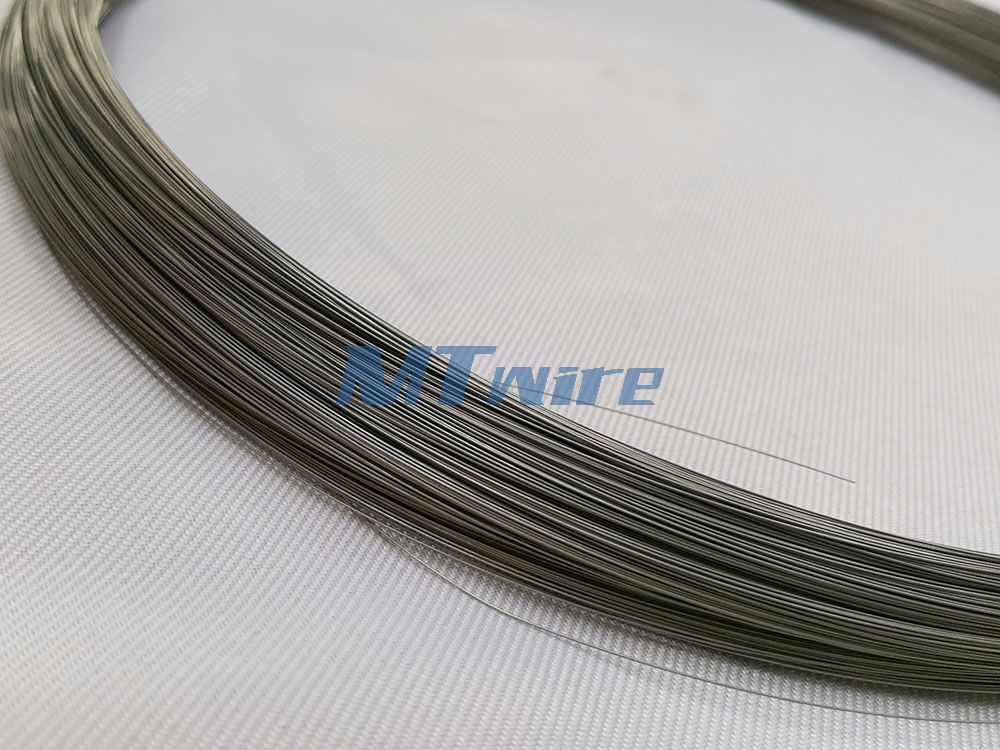
ASTM F138/A313 Alloy 304V/316LVM Medical Wire Stainless Steel Fine Wire
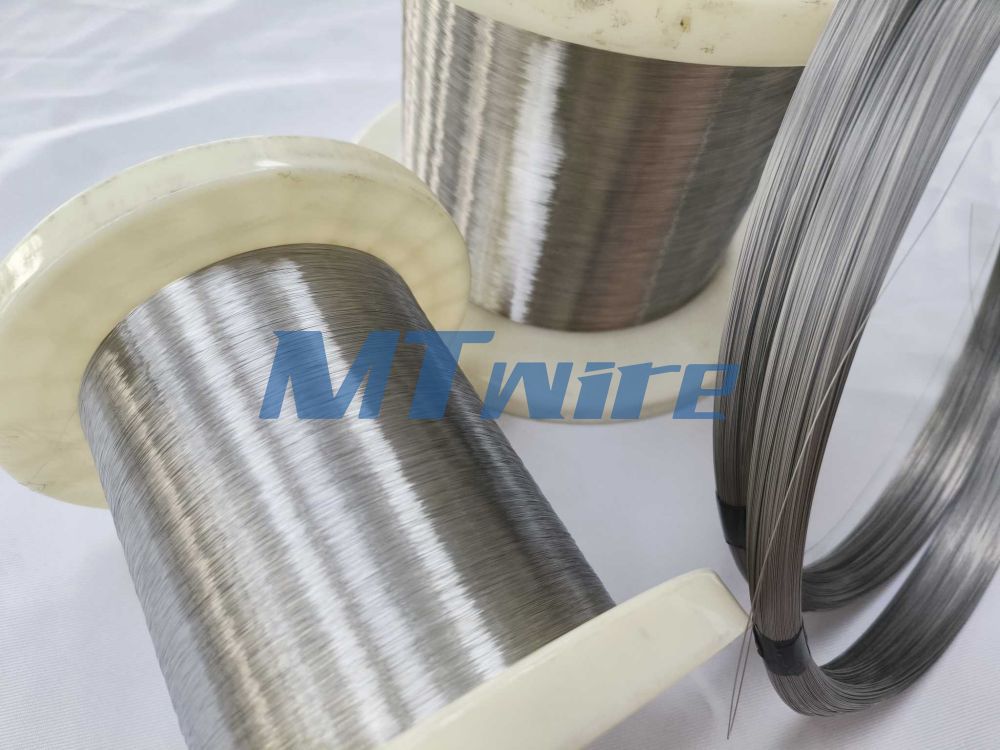
Alloy 304V is a double melted austenitic stainless steel. Alloy 304V is used in many corrosive environments and atmospheres. The alloy is initially electric-arc melted followed by a Vacuum Arc Re-melt (VAR). This melting practice minimizes voids and contaminants while yielding a more uniform chemistry. This refinement to the purity and homogeneity of the metal allows for use in high reliability products. 304V is a flexible, robust material that can easily be soldered or welded.
ASTM F138/A313 Alloy 304V/316LVM Medical Wire Stainless Steel Fine Wire
| Material | Stainless Steel Medical Wire |
| Grade | 302, 304V, 304LV, 316LVM, Custom 455, Biodur108 |
| Standard | ASTM A313, A313M, A276, F899, A564/A564M, F2229, F138ISO 5832-1 |
| Size | φ0.15mm-φ16mm; Or According To Customers' Requests |
| Type | Round, flat, core, braiding, staple |
| Condition | Annealed and Soft, 1/2 hard, 3/4 hard and full hard |
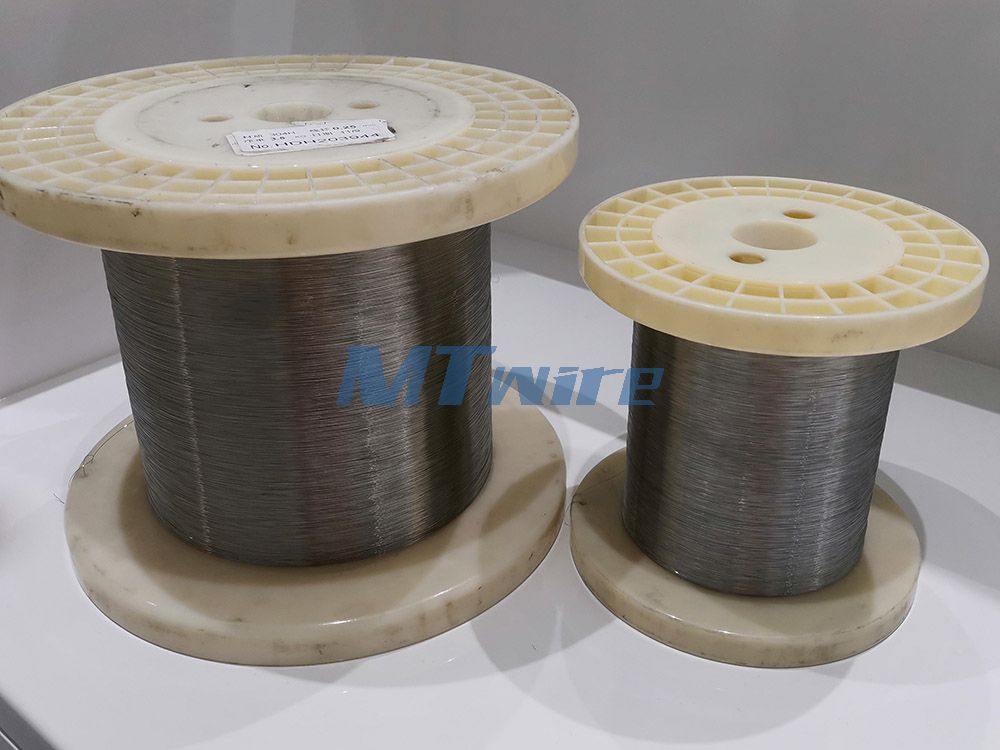
| Packing | Woven bag, core, wooden reel, etc |
What is Stainless Steel 304V and 316LVM?
Alloy 304V is a double melted austenitic stainless steel. Alloy 304V is used in many corrosive environments and atmospheres. The alloy is initially electric-arc melted followed by a Vacuum Arc Re-melt (VAR). This melting practice minimizes voids and contaminants while yielding a more uniform chemistry. This refinement to the purity and homogeneity of the metal allows for use in high reliability products. 304V is a flexible, robust material that can easily be soldered or welded.
316LVM is a type of stainless steel that undergoes vacuum arc remelting to enhance its corrosion resistance and produce a microstructure free of ferrite. Compared to standard 316L, this version of 316 stainless steel has a higher nickel content and lower levels of carbon, molybdenum, and chromium. It is commonly dual-certified and known as 316LS stainless steel. Additionally, 316LVM displays exceptional resistance to pitting, crevice corrosion, and physiological environments. These properties make it an ideal choice for use in medical applications and high-precision electronic devices.
| Steel Grade | DIN | Chemical composition | ||||||||
| C | Si | Mn | P | S | Ni | Cr | Mo | Other composition | ||
| 314 | ≤0.25 | 1.5-3.0 | ≤2.0 | ≤0.045 | ≤0.030 | 19.0-22.0 | 23.0-26.0 | |||
| 304V | ≤0.08 | ≤1.0 | ≤2.0 | ≤ 0.040 | ≤0.030 | 8.0-10.5 | 18.0-20.0 | ≤0.75 | Cu:≤0.75 | |
| 316LVM | ≤0.03 | ≤0.75 | ≤2.0 | ≤0.03 | ≤0.010 | 13.0-15.0 | 17.0-19.0 | 2.25-3.00 | N:≤0.10 | |
Quality control of raw materials
Slight changes in chemical composition and mechanical properties of raw materials will have a significant impact on the properties of finished steel wire. Therefore, the quality of base bar is one of the key factors to determine the quality of finished steel wire. We will strictly test the raw materials. Only raw materials that pass the test and meet the standards can go to the next process.
Quality Control
Raw Materials: MTC checking(PMI), Tensile strength test, Surface/Dimension inspection
Prodcution: Specially assigned person shall follow up and check according to the process flow card, and finally keep the copy
Before shipment: Mechanical properties test, Surface/Dimension inspection, or according to customers’ requirement
|  |
Why you choose MT Wire?
Company Overview:
Quality Control

Why Choose MTSCO?


Factory Complex
Provide you with cost-effective products and professional services.
One stop procurement of wire products
Leave the complexity to Mtsco and the simplicity to you.
After the test of time for 18 years
Whether the products, services, capital and strength, Mtsco is your optimum partner.
Send Inquiry
*Required fields are marked.